What is Bitcoin?
The explanation that finally clicks.
It took me about five years to actually get Bitcoin, and I called it a scam for most of them. This is the version that finally made it click: six plain ideas, with no jargon and no hype. Once you see it, you cannot unsee it.
Don't take my word for any of it. Check it.

Here's the whole thing in one line. Bitcoin is digital money you hold and send yourself, like handing someone cash, but online, with no bank in the middle and no one who can freeze it or print more.
That sounds either obvious or mad, depending on where you start. So let me show you the problem it solves, then the six ideas that make it work.
The problem it actually solves: trust
Our whole money system runs on trust, and that trust keeps getting broken.
You trust banks to actually have your money. Then 2008 happens, or Silicon Valley Bank in 2023, and people can't buy groceries because the bank "temporarily" froze withdrawals.
You trust governments not to print too much. Yet about 80% of all the US dollars that ever existed were created in just a few years from 2020.
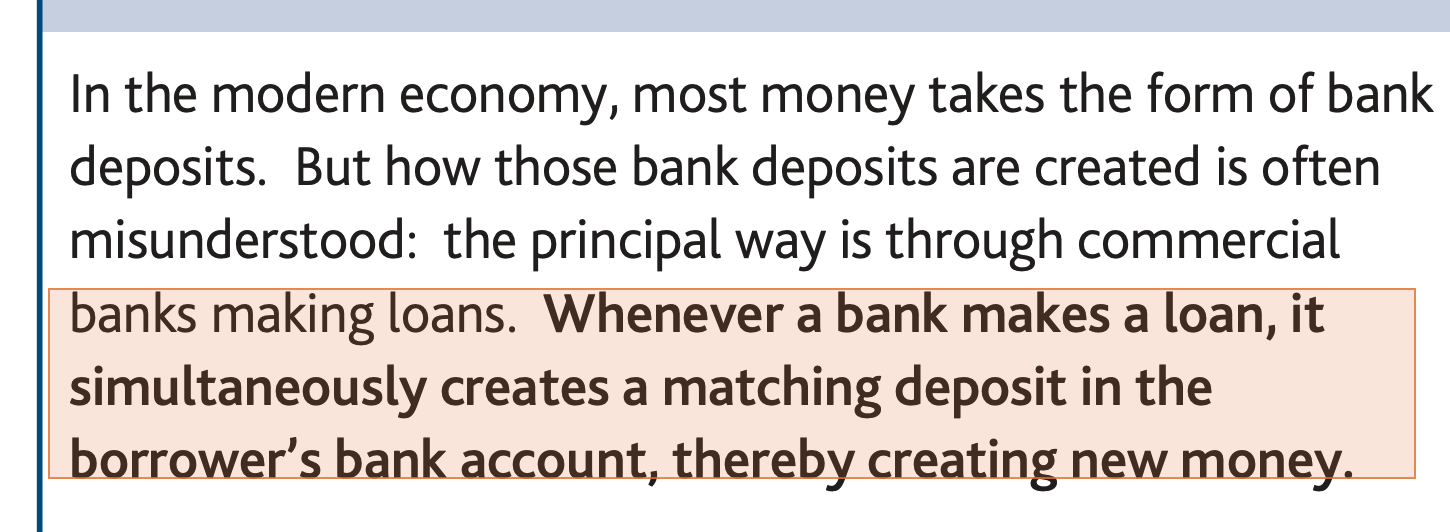
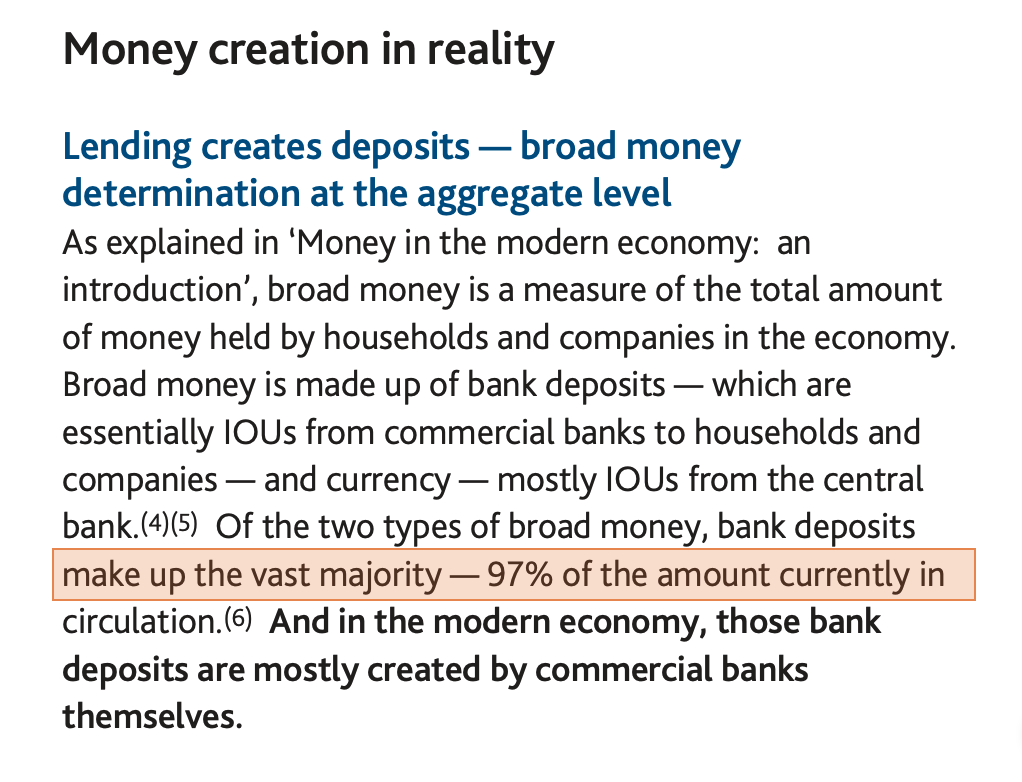
And you trust payment firms to move your money, right up until they freeze your account over a policy you never read.
It's like playing poker where the dealer plays against you, controls the rules, counts the chips, and can print more chips whenever they start losing. That is the system we have now.
Six ideas, and then it clicks
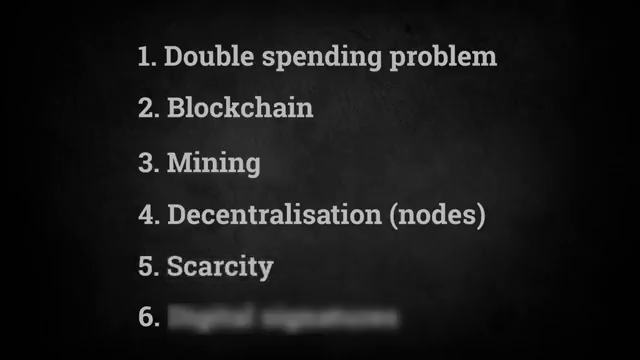
Bitcoin is one invention made of six older ones, stacked together. Get these six and the whole thing falls into place. We'll take them one at a time.
The copying problem
If I email you a photo, now we both have it. Money cannot work that way. If I send you £20, I should not still have that £20.
For decades, computer scientists thought you could not fix this without a central referee. Banks are that referee: they keep one record, and if you try to spend the same £20 twice, the bank says no.
Which drops you straight back into trusting the bank. So the first thing Bitcoin had to crack was digital money that can't be copied, with nobody in the middle. The next five ideas are how it did it.
The magic notebook
Imagine a notebook that copies itself for everyone in the class. You can only add a new page once you've solved a tricky puzzle and everyone agrees you got it right. Once a page is written, not even the teacher can rub it out.
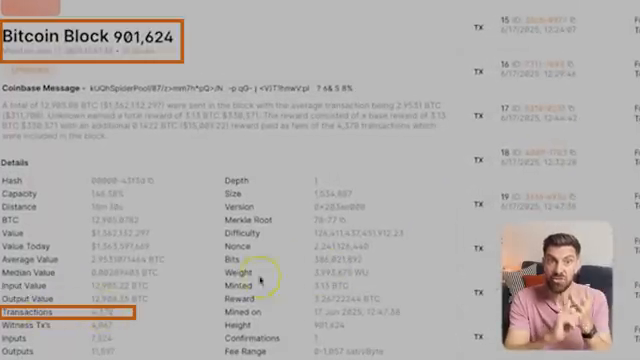
That is the blockchain. Instead of one bank updating its private records, thousands of computers worldwide record each transaction in public, in order, a new page roughly every ten minutes.
Here's the clever part, the bit that makes it impossible to fake. Each new page carries a tiny fingerprint of the page before it. So the pages are chained together, which is where "blockchain" comes from.
Change a single line on an old page and its fingerprint changes. That breaks the next page, and the next, all the way down. To rewrite one entry you'd have to redo every page since, on more computers than exist. So once something is written, it stays written.
And you don't have to take my word for it. Every page ever written is open for anyone to read.
The global lottery
This is the bit everyone gets wrong, me included. When I heard "mining" I pictured digital pickaxes. It is nothing like that.
Mining is a lottery. Not "solving complex maths," not pickaxes. A worldwide guessing game, and here is exactly how a round works:
Here is why that matters. For the first time, we have something digital that costs real-world energy to make. An email or a song copies for free. A bitcoin does not. You cannot copy-paste more into existence, and that single fact is what gives it weight.
Tens of thousands of auditors
Surely some clever hacker can just cheat all this? Here's why they can't.
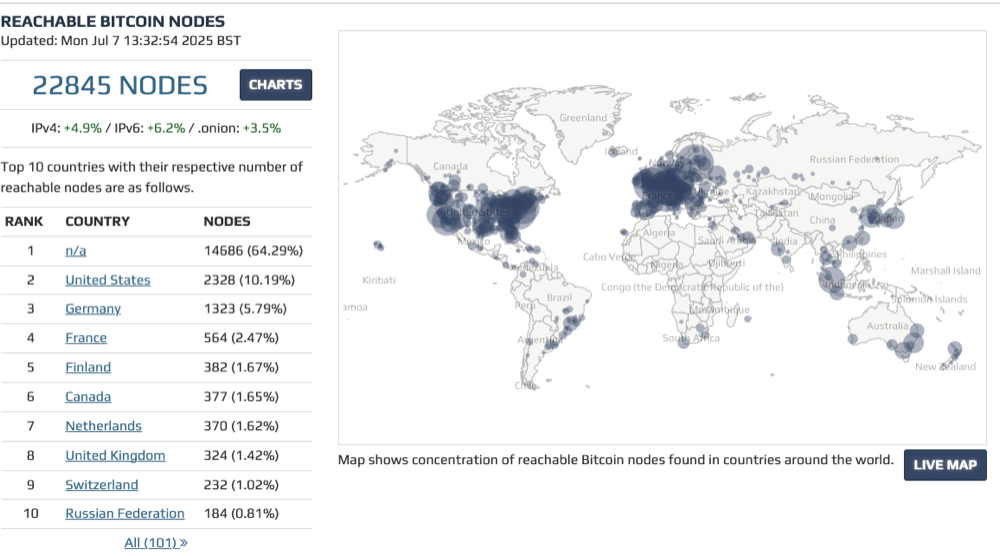
Anyone with a laptop can run a "node": a computer that keeps the whole ledger and checks every rule. When a miner adds a block, all these independent nodes verify it. Try to cheat, say by giving yourself extra coins, and they throw it out.
It's tens of thousands of auditors checking the books at once. No one changes the rules unless almost everyone agrees. That's why the motto is "don't trust, verify."
And there's no boss to lean on either. Satoshi, the creator, vanished and never came back. Every other digital money had a founder or company to pressure, regulate or arrest. Bitcoin has no one in charge to target. That isn't a bug. It's the whole point.
The countdown timer
Only 21 million bitcoin will ever exist. That is brand new for humanity. Every money in history kept expanding, even gold, which will roughly double again over the next 60 years.
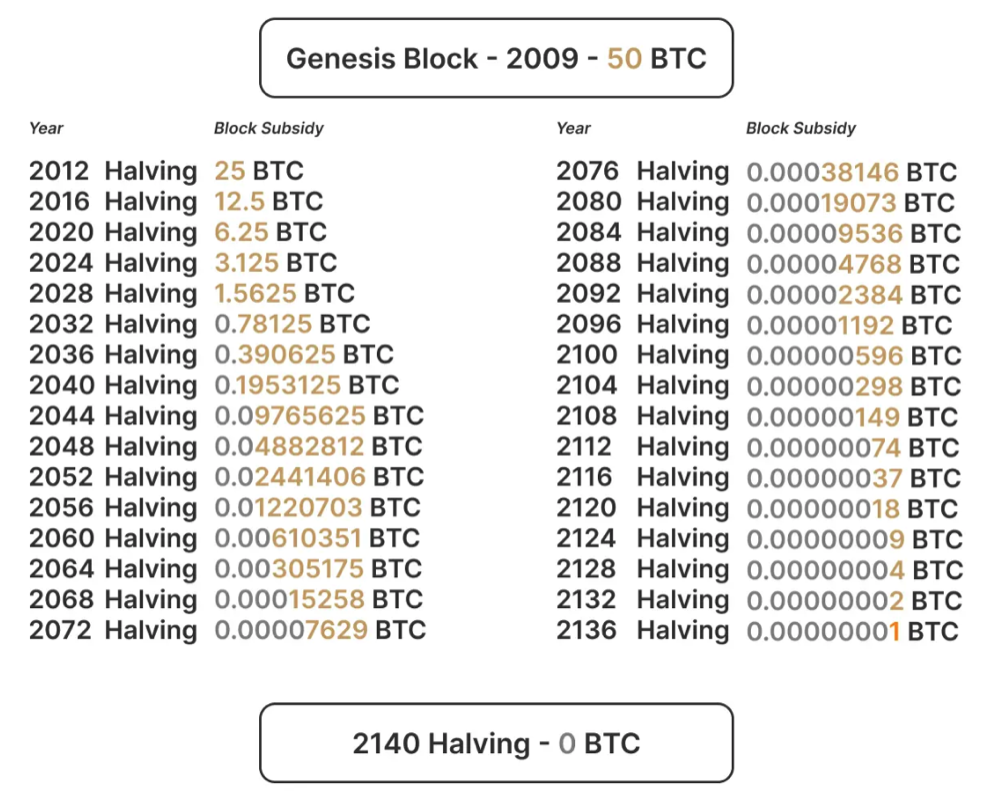
Here's the engine behind that curve. Every 210,000 blocks, roughly every four years, the reward miners get for a block is cut in half. It started at 50 bitcoin, then 25, then 12.5, and today it's 3.125.
So new coins arrive slower and slower, halving after halving, until around 2140 when the reward rounds to zero and the very last bitcoin is mined. In a world where governments print trillions overnight, this schedule cannot be changed.
"Only 21 million" sounds too few, until you remember each one splits into 100 million pieces. Plenty for the planet, and you buy a coffee with a sliver, the way you wouldn't need a whole gold bar for the groceries.
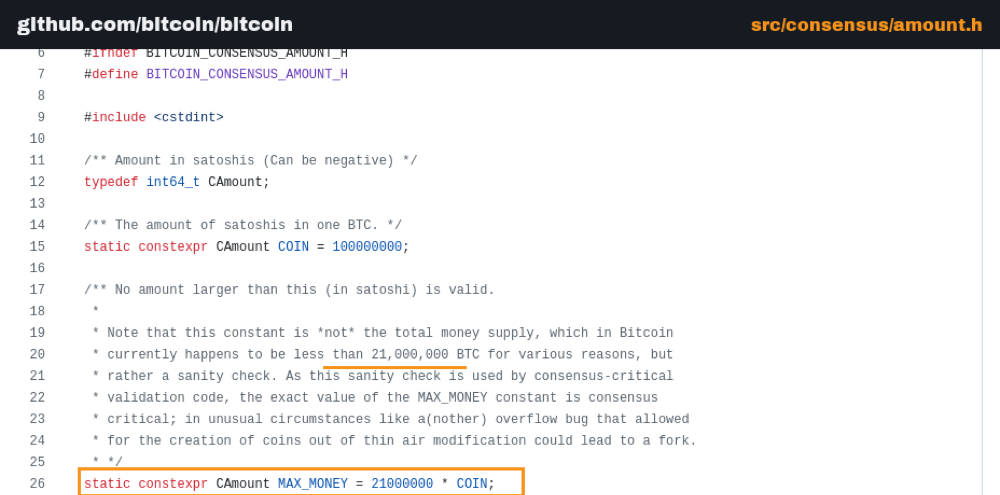
And it isn't a promise you have to trust. The 21 million is written in the code that every node runs. You can read the exact line yourself.
The unbreakable key
So where is your Bitcoin actually kept? Everywhere and nowhere. What you own isn't a coin in a vault. You own a private key, usually held as twelve simple words, that proves the coins are yours to move.
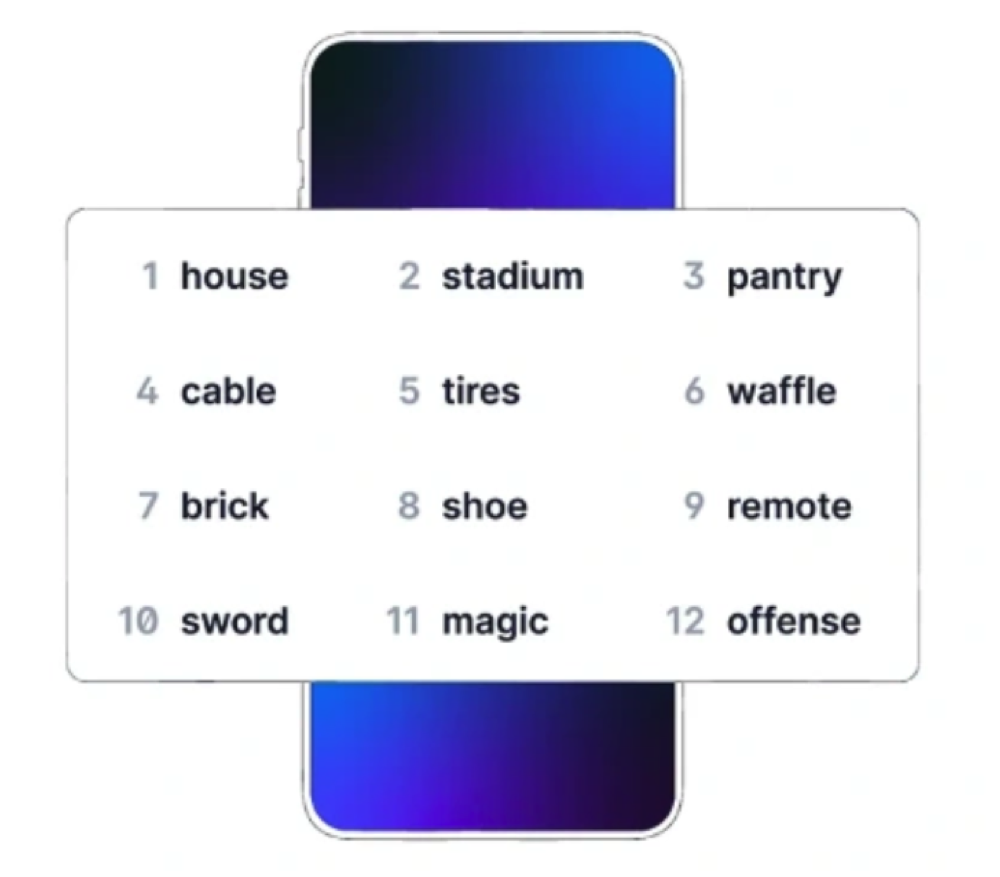
When it's truly yours, no bank and no government can freeze it or take it. "Not your keys, not your coins."
In Cyprus in 2013 the state simply took 47.5% of large bank deposits. Your bank balance is an IOU you're allowed to look at. Bitcoin held properly is the actual thing, in your hand.
Put the six together
Step back and look at what we just built. Money that can't be copied. A public ledger nobody owns. New coins that cost real energy to make.
Millions of auditors enforcing the rules. A supply that can never grow past 21 million. And keys that make it truly yours.
No banks. No government. No single point of failure. We accidentally described digital gold that's better than actual gold.
Why this matters
This is the bit Michael Saylor was getting at, the line that made me stop and stare at my screen.
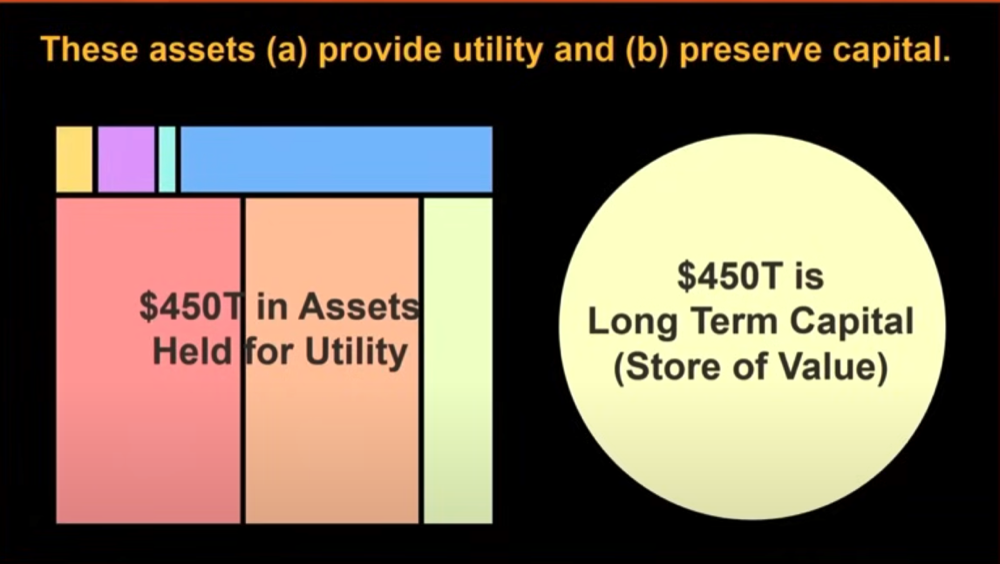
Half the world's wealth is just people trying to hold onto what they have. Bitcoin is the first money built for exactly that one job, where nobody can inflate it away or freeze it.
That's its use case. You get to keep your money.
Want to see what that could actually mean for you? The free Financial Freedom Calculator shows the year you might stop needing to work, in pounds and in Bitcoin.
Don't trust me. Verify it.
The best way to understand Bitcoin is to run the rules yourself. I put the whole setup, running your own node and holding your own coins, into one free guide.
Get the free node + security setup →Still got doubts? Every objection I ever threw at Bitcoin, answered with the data, is in the Skeptic's Guide.